Thursday, March 20, 2008

Carol Shields, again.

We all know how much I love Carol Shields, so telling you I loved The Stone Diaries might sound a bit like beating a dead horse--but before you stop reading, hear me out. First off, I don't think The Stone Diaries is quite on par with Unless, I doubt I'll even think anything is on par with Unless. So if you haven't read Unless yet and you are wondering which of her books you should read I still recommend that over The Stone Diaries. That said there are lots of similarities about the novels. Both are the first person narratives of a woman trying to figure out her place in the world. Both understand much of who they are through their relationships with others. And both of them have won some pretty hefty awards. The Stone Diaries in particular has won the Pulitzer for fiction, The Governor General's Award, The Prix de Lire in France, The U.S. National Book Critics' Circle Award and Unless was shortlisted for the Booker.

The Stone Diaries begins in 1905 with a woman who shockingly discovers she is labor, shockingly because her naivety has kept her from realizing she was even pregnant. And thus begins the life of Daisy Stone, a child brought into the world as her mother leaves it. This is in part why she never really understands who she is or who she is supposed to be. As if she never got the chance to live the life she was supposed to have. We follow Daisy through childhood, college, marriage, life as a widow, married again, motherhood, widowed again and on into old age. Its begins at the beginning of the century and ends at the end of it. Its a beautiful story told that spans an array of situations and emotions and has the ability to sweep you off your feet and into a different life--and to help you get there book even includes a series of family photographs inserted into its pages. It does have some drawbacks though, it starts off slow and the climax is possibly somewhere around 3/4 of the way through--thus the ending seems somewhat unnecessary at times, or maybe just anti-climatic. But that's not much of a complaint if you think about some of the crap people are reading. Carol Shields does what she does best in this novel, that is portray the beautifully quotidian lives of women. In an interview with the NYT's after the book came out she said, "Someone wrote me a letter, saying, 'I wish Daisy had tried harder.' Well, I didn't think there were enough novels about women who didn't make the historical record."

Tuesday, March 04, 2008

More books about books...

As you all know I haven't much time for extra-curricular reading, and poor luminous has taken the brunt of the fall. I've thought about posting about my readings, but how many of you really want to know the antonym of insects or how to tell an american cockroach from an oriental one. Few of you, I'm positive. I am curious to know what books you are reading though, and I think our other visitors are too. A few sentences would do for a posting, a might just be the life blood that keeps luminous going.

That said, I did recently finish a book. Used and Rare: Travels in the Book World by Lawrence and Nancy Goldstone. The writing was simple, the ideas mostly dull and yet I read it cover to cover--never mind the fact that it took me three months. If you are interested in learning key words that come up in the book business (and by that I do mean the used and rare books business) this book is a great primer. From foxing and sizing to rag paper and red rot, there are many great terms scattered through out the book that anyone interested in working with books for a living should probably know.

That said the couple who co-authored the book are both supposedly writers but didn't come to have a love for book collecting until their mid-thirties. Whaaa? And if they had really read all the books that claim to have read, I would think their writing would be more refined and poetic. But alas, it's not. It also takes them all of 200 pages to and thousands of dollars to come to the conclusion they started off with. $7,000.00 for a book isn't reasonable for the average person. Lord knows how they were able to afford this "hobby" on writer's salaries. But since they the dropped book collecting like a bad habit by the end of the book, I guess it's not worth spending too much time trying to figure out.

Tuesday, February 12, 2008

want something to look forward to?


I was browsing the non-book website Rottentomatoes, and came across this story and thought, whoa, awesome. It said:
"After the extraordinary success of No Country for Old Men, the Coen Brothers are hitting the books again, this time adapting Michael Chabon's The Yiddish Policemen's Union. The two will direct the film after their next announced project, the dark comedy A Serious Man."
I haven't yet read Chabon's latest book, but I love his work and have read all his other books (except Summerland). The Coen's can do pretty much anything, it seems, and Chabon is a graceful and wonderful storyteller, so start anticipating.

Friday, January 18, 2008

The Time Travellers Wife

I loved this book.

With that I shall start by saying, before I picked up Audrey Niffenegger's The Time Traveller's Wife, I knew I would either hate it or love it. Everyone I've meet who has read it has the strongest of feelings about it. But lucky me, I was head over heels, unabashedly in love with everything about it. For seven short days I stopped reading it only to sleep (and then I would dream about it) and sometimes to eat. For those of you who are living in a different world, or maybe a different time and have not heard about the book. It is the love story of Henry DeTamble and his once and future wife Claire Abshire. Henry time travels (uncontrollably) backwards and forwards through time. The book opens with Henry in his late 30's and 40's visiting young Claire as a small child, where she first falls in love with him. When Claire is grown and meets Henry in "real" time, he has no idea who she is--because hes too young--and so the love story blooms again but in a more sophisticated and tangible manner.

It gets better though, the book has a third (and arguably my favorite) major character, Chicago. If one gets nothing else out of this gem of a book its Niffenegger's love for this wonderful city. Her visual of the buildings and streets and venues are worked into every page. She relives concerts, (Violet Femme's early 90's appearance at the Arragon--of which I know of at least one other person who was there). She gives you the ins and outs of her favorite records stores, restaurants and all other things perfect about Chicago. It's an intimate and quotidian tour in your very hands.

I love love loved it.

Disclaimer: This is the first novel I was able to read in months. And as you all know by now, I live and breath for the moments in which I can curl up with a novel. So, it is possible that Niffenegger book may not have struck me so intensely had it just been one of many I was in the middle of. So, on that note, if you know you enjoy the same kinds of books as me...what the hell are you still doing here?!? Go get it...NOW! But if you generally find my likings disagreeable then please by all means stay the hell away (from the book, not me.)

p.s. the paper quality of the book is also amazing.
p.p.s if you aren't into reading, it will soon be a film.

Monday, January 14, 2008

English Major? Part II

Stanley Fish is back in the Times, defending his article that the study of Humanities serves no purpose. He clarifies his point (it's not that works of literature and art do nothing, it's that studying them in a classroom does nothing) and he reestablishes his point (real world understanding and academic understanding are independent).

"All of this should not be taken to mean, as it was by some, that I am attacking the humanities or denigrating them or declaring them worthless. I am saying that the value of the humanities cannot be validated by some measure external to the obsessions that lead some (like me) to devote their working lives to them– measures like increased economic productivity, or the fashioning of an informed citizenry, or the sharpening of moral perceptions, or the lessening of prejudice and discrimination."

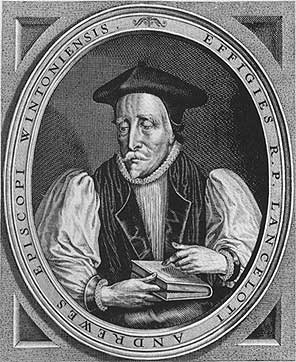
Well, Stanley. You've made your point pretty clear. And reluctantly, I might have to agree with parts of it. ("What benefit do literary studies hold out to those asked to support them? Not much of anything except the (parochial) excitement experienced by those caught up in arcane discussions of the mirror stage, the trace, the subaltern and the performative." Half the time, I bore my wife and friends with my discussions of 16th century religious discourse surrounding Lancelot Andrews' influence on drama. If the wife can't listen, what hope is there?) And yet. I do think studying literature, not just reading it but breaking it down in the classroom can "sharpen moral perceptions" and "lessen prejudice and discrimination." So.

Monday, January 07, 2008

English Major? What good will that do you?

Stanley Fish has an Op-Ed in the NYTimes today on the what value can be found in studying the humanities. (answer: "none whatsoever")

" Do the humanities ennoble? And for that matter, is it the business of the humanities, or of any other area of academic study, to save us?The answer in both cases, I think, is no...Teachers of literature and philosophy are competent in a subject, not in a ministry. It is not the business of the humanities to save us, no more than it is their business to bring revenue to a state or a university. What then do they do? They don’t do anything, if by “do” is meant bring about effects in the world. And if they don’t bring about effects in the world they cannot be justified except in relation to the pleasure they give to those who enjoy them."

All this time I thought I was "do"ing something that had an effect on the world. Oh well, Fish, you've always been the reader-response man. Short-sighted, in my opinion.

Sunday, December 30, 2007

Harry Potter 8.

"Harry Potter author J.K. Rowling has strongly hinted for the first time that she could write an eighth book in the series. Rowling, 42, admits she has 'weak moments' when she feels she will pen another novel about the boy wizard. One of her biggest fans – her 14-year-old daughter Jessica – has already put pressure on her to revisit the character... However, if an eighth novel were to be written, Rowling concedes it is unlikely that Harry would be the central character."

...

That would be more interesting that her "political fairy tale" for adults. Leave that to Philip Roth.

Wednesday, December 19, 2007

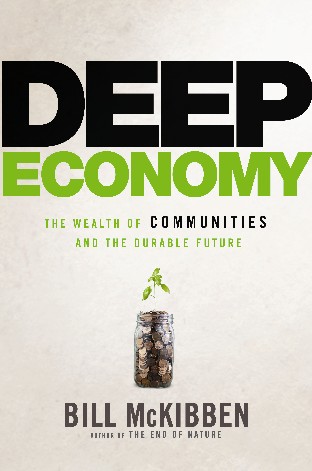
book report: Deep Economy


I read the first economics book of my life. Bill McKibben, author of the famous The End of Nature, put together Deep Economy to investigate the current economic trends of the U.S., arguing essentially that for the first time in the history of human civilization, a selection of people no longer believe More is equal to Better. If we as humans want to continue down the road to Better, slowly more and more people will realize that not only is More not the same, but it is often antithetical to Better.
McKibben attempts to demonstrate the error of the standard economic model of "growth=good" and turn it upside down to local is better, smaller is better, community is better. But it will cost economic growth. Of course, the United States doesn't want to hear anything but growth growth growth, so McKibben, using agriculture, radio, entertainment and production examines models that have been in place for years, whether we have been aware of it or not. What I found to be the most interesting examination is McKibben's look at Cuban Agriculture post-Fall of Soviet Union. Why Cuba? Because "with the collapse of the Soviet Union, Cuba fell off a cliff of its own and became the first place in the world to face peak oil." Peak oil is the threat, and McKibben finds those places in the world that have existed without the threat or after the threat of peak oil.
It's a good read. Some of the most interesting parts of Deep Economy are simply the collection of numbers and research that exists that I haven't seen elsewhere, especially in regards to China ("By some estimates, (China) needs to add an urban infrastructure equivalent to Houston's every four weeks just to keep pace"!).
It gets redundant towards the end, but it's worth a week for sure.

Monday, December 17, 2007

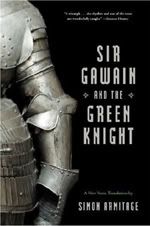
Men sat there gaping, gasping
at his strange, unearthly sheen,
as if a ghost were passing,
for every inch was green.

I know I can't be the only one geekin' out over this.

Wednesday, December 12, 2007

preserving history one page at a time


Believe it or not I have finished my first full semester of grad school (I'm still in the not period). And to celebrate I've decided to post on Luminous. Why? Well, because I can, thats why.

So here is something I thought you might be interested in. In doing research for my literature review I came across Project Gutenberg an online book catalog that allows you to download books. Its pretty great, if you are into that sort of thing. I used it to look up some rather obscure books, so I can only imagine they have some more popular picks as well...though I can't confirm this as of now. If you support the project they could use your help editing their books...the objective is the more people proof reading, the more books they will be able to make public. If you are interested follow the hypertext.

Thanks again to all of you for continuing to visit luminous in my absence. You are much appreciated. Now I am off to pick up my first novel in months!! Woohoo!!

Wednesday, December 05, 2007

Pullman and the Compass thing.


I am thinking about reading His Dark Materials. People seem to like it. At least the first one, the last two I hear less wonderful things about, but still, some.
Anyway. With all the hullabaloo surrounding the release of the movie and religious uproar (which I am generally a huge fan of) and that only makes me very interested and whatnot.
Seriously, there are some huge fans of Pullman, and youth fiction around this area. Should I read these three books?

Tuesday, November 27, 2007

He is Legend.


I don't really read science fiction or horror novels much these days. When I do it's usually because there's a film version coming out, and it looks awesome. Well, I Am Legend was no different. I heard about the film over a year ago, thought it sounded awesome, and now I've just finished the book. I Am Legend, the book by Richard Matheson, you should read it. It will only take you a few days.
For those who like post-apocalyptic fiction, or science fiction, or just an interesting piece of work, it's a wonderful read. It's like a modernist "literature of of the mundane" set in the most terrible scenario imaginable. Sure, it's a "vampire" novel, but it's not really a vampire book. It's far more an experiment in morality. If you were the last human being on earth, what ethical and moral code would restrain you? That's Robert Neville's position. Everyone on the planet has been infected by the plague of 1975, and turned into either a vampire (someone who died from the plague and came back to life) or was infected but never died, and therefore is technically living with an illness. Robert, who spends his nights drunk and his days killing sleeping and hiding infected, thinking about women, and missing the world, is also pleasantly a deep-thinker, bringing up some of the most interesting moral dilemmas we know. While trying to figure out how to cure the illness, he murders thousands of "sick" people, living with a germ they happened to come upon. He also believes that it was the human wars, bombs, and germ warfare that caused such devastation. How then, can these others deserve to die? Why shouldn't he be the one to die? He is after all, the new legend, the rumor of the last man; it is the infected now who are the majority in the world.
There is a brilliant moment in I Am Legend, when Robert has been alone for about 2 years. He opens the door in the daytime and a dog runs by. For 2 years, never has a living creature been seen in the daytime; then a mangy mutt. He takes it in; it dies, and it is heartbreaking. Richard Matheson delivers on moments like these. It's a lovely scene in a scary and delightful book. And the ending, oh man. I can't wait to see Will Smith give us this ending. They better not change the ending. It is fucking unbelievable.
I Am Legend.

Thursday, November 22, 2007

Holiday Reading?

If you're looking for a book or two to read over the holidays, the New York Times has posted their annual 100 Notable books of 2007. The list is long and I know that I (czf) have not read any of them, since I haven't read any new books this year. However, take a look and see if there is anything you want to read. Then read, and let Luminous know how it was.
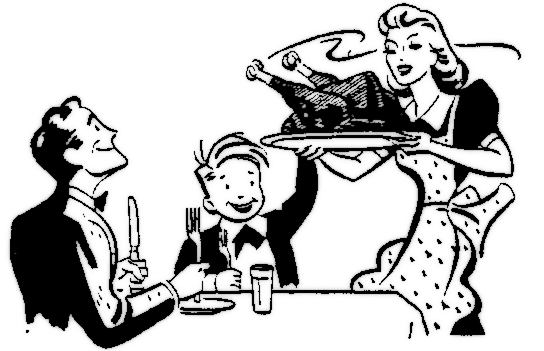
Happy Thanksgiving and Black Friday from Luminous, the bookblog you love to read.
I find this picture hilarious. That kid looks like Denise the Menace or Richie Rich. So.

Tuesday, November 13, 2007


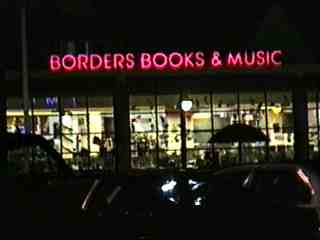
Borders Books has solved the reading problem. Finally. How, do you ask, how can they finally bring the people into the stores to buy those books and start reading once again? Television. "A new strategy at Borders will reinforce the message that its stores are not just about books: the company has been installing 37-inch flat-screen televisions to show original programming, advertisements, news and weather." Of course, these tvs aren't there for people to really watch, because the store's about books. "The screens are “not designed to be intrusive,” Mr. Jones said. Rather, he said, they are “part of a master plan to create content that will do several things for us,” like directing traffic to the Borders Web site and paving the way to more cross-promotional deals with large media companies."
Yeah. So now, when you come to the store, you can more efficiently be directed back to your house to buy online. WooHoo!

Saturday, November 10, 2007

Norman Mailer Dies

Norman Mailer, the combative, controversial and often outspoken novelist who loomed over American letters longer and larger than any writer of his generation, died today in Manhattan. He was 84."

Fairwell, Norman. Someday I promise to read the Naked and the Dead.

Thursday, November 01, 2007

Rowling Makes another odd Harry Potter Choice

Luminous will not transform into a blog solely focusing on Harry Potter. However, here is another post about Harry Potter. "J.K. Rowling has completed her first book since concluding the tale of teen wizard Harry Potter -- an illustrated collection of magical fairy stories titled "The Tales of Beedle the Bard." Wonderful. It's nice to see she's still writing.
Get this crazy shit. You know how Harry Potter is popular, and that adults and children the world over love and adore everything Harryish? Yeah? That must be why Rowling is printing seven copies of "Beedle the Bard". 7! "Only seven copies of the book are being printed, Rowling said Thursday. One will be auctioned next month to raise money for a children's charity, while the others have been given away as gifts...The volume, bound in brown morocco leather and mounted with silver and semiprecious stones, will be auctioned at Sotheby's on December 13 with a starting price of $62,000. " Whatever. I want to read the damn thing too.

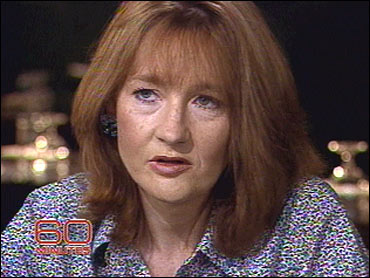
In another J.K. note: Here is the picture of Rowling that accompanies CNN's article.
Is that really her? Does she look different to you than when she first came out and started writing the Harry Potter?


Wealth. What can't you do?

Monday, October 29, 2007

The Never-Ending Story

Today's NYTimes has (another) story on Dumbledore, and I thought I would post it, because I like this part. It's thoughtful and handles the question of whether Rowling's Dumbledore is the reader's.
Then, this: "Her heroes are the hybrids, the misfits, those of mixed blood, all bearing scars of loss and love: the half-giant Hagrid, the mudblood Hermione (whose parents were not wizards), the poverty-stricken Ron, the orphaned Harry. Perhaps speaking of Dumbledore as gay was just a matter of creating another diverse rebel against orthodoxy."
Lovely.

Monday, October 22, 2007

Harry Potter and the Half Gay Headmaster


J.K. Rowling has revealed to her legion of adoring fans that Hogwarts Headmaster and the embodiment of good motives, Albus Dumbledore, is in fact gay. For those of you who have read the books, this won't come as much of a surprise (I think), but that's not what interests me in this discussion.
What interests me is the amount of control that Rowling maintains over the Harry Potter universe after the series is completed and written. She did not include any overt reveal involving Dumbledore's homosexuality in the novels, I imagine deliberately, but there are things to make you wonder. Why do that if you are going to come out and say it later? Let people argue over it, that's part of the fun of reading.
For example, I believe that Jonah in Knocked Up is a closeted homosexual (this link is not work-friendly). That can't necessarily be right or wrong, right? If Judd Apatow came to my house and said, Sorry Chris, but Jonah is straight, what would that mean? I would still think he is gay. Shouldn't Rowling leave these kinds of questions to readers if she has not addressed them in the books? There were times in the HP novels when I thought several different characters might be gay, including Dumbledore. Now Rowling has come out and said, yes, Albus is gay, this whole time, aren't you shocked? Should authors be doing this after the fact?

Wednesday, October 17, 2007

Booker Winner

Anne Enright, author of The Gathering, has been awarded the 2007 Mann Booker Award for Fiction. Tis' yet another book to add to my already too long list of reading to be done over christmas break .

From the Mann Booker Site:
Over and above her prize of £50,000, Anne Enright is guaranteed a huge increase in sales and recognition worldwide...and a designer-bound edition of her book.
When asked what she was going to do with the winnings, she said she didn’t know - ‘perhaps a new kitchen!’ - and joked that she had bought a new dress that morning which she was pleased she could now afford.
For more information about the winner for this year’s Man Booker Prize please read the
official press release.
Anne Enright was interviewed following the announcement by BBC Newsnight which you can view again at
BBC Online.
To read a short Q&A with Anne Enright after the shortlist announcement please
click here.

Friday, October 12, 2007

the Civil War


I have undertaken to read the mighty The Civil War: A Narrative. It's a giant. Three volumes (thanks BMO) of hulking 800 page glory. I started it about, oh, 6-8 weeks ago, and let me tell you this: it's slow going. I'm only 250 pages into the first volume, "Fort Sumter to Perryville," but I thought I would share some of the lessons I have learned.
1) Lincoln was one badass son of a bitch. Most people kind of know this, but I don't think most really know quite how badass he was. Unafraid to sit back and take the heaps of criticism that he wasn't doing enough, making no public reference to the Confederacy (which would legitimate their existence), calmly seeing to the dirty business with confidence. He's quite the literary character.
2)Lincoln was one unapologetically emotional man, which makes me love him the more. On hearing the death of his friend Ned Baker in the war, Foote writes:
"Lincoln sat for five minutes, stunned, then made his way unaccompanied through the anteroom, breast heaving, tears streaming down his cheeks. Orderlies and newspapermen jumped to help him, but he recovered his balance and went on alone, leaving them the memory of a weeping president."
Is there any better image of Lincoln than as a president stumbling, weeping down the streets of the capitol. Love it.
3) Foote was one badass writer. See the above quote for evidence. There are so many names, locations, rivers etc. in this damn book, and I have heard of about ten percent, but Foote handles the narrative engagingly, and keeps you moving. Plus his writing is smooth and wonderful. Read the opening paragraph of the book for proof.
4) I kind of sympathize with Jefferson Davis. This is certainly something I did not expect, and I think is a testament to Shelby Foote.
5) Despite 4, the segregationists as a whole don't seem to have gotten a worse rap than they deserve. At least at this early second year in the war that I've reached, they're as reprehensible as you would imagine.
6) Ulysses S. Grant's real name is Hiram Ulysses Grant. His nickname at Academy was Uncle Sam, and when he recieved a congressional appointment, the papers took the initials and the document read Ulysses Simpson Grant. Grant never wanted to tangle with the red tape to change it. Weird.